 1
1
 0
0
If you listen to a second-generation Filipino-Austrian in a Viennese café, you will hear flawless local dialect—complete with the sharp, rhythmic cadence of Wienerisch. They navigate the Gymnasium system with ease, understand the subtle social codes of Austria’s urban youth, and consider a snowy winter as natural as any lifelong local.
Yet, for many of these young adults born to the pioneering generation of Filipino nurses and workers who arrived decades ago, belonging is rarely a simple equation.
While their parents’ story was defined by economic sacrifice, labor integration, and the courage to build a life in a foreign land, the story of the second generation is vastly different. It is an internal journey—a delicate balancing act between parental expectations, cultural preservation, and the search for an authentic Austrian identity.
The Invisible Bridge
Unlike their parents, who moved to Austria as adults with an established sense of cultural self, second-generation Filipinos grew up inside the culture clash.
At home, the atmosphere is distinctly Tagalog or Visayan: shoes off at the door, the aroma of garlic rice in the morning, and traditional values centered on utang na loob (a deep sense of familial gratitude and obligation) and deference to elders. Step past the front door, however, and they enter an Austrian society that prizes individual autonomy, frankness, and self-assertion.
Growing up means translating not just words, but entirely different worldviews—acting as a cultural bridge before you even fully understand either side.
This dual existence creates a unique pressure. In Austrian schools, being quiet or agreeable can be misinterpreted as a lack of engagement or confidence. At home, being overly assertive can be misconstrued as disrespecting one’s roots.
The Heavy Burden of Gratitude
One of the most profound, yet underdiscussed, challenges facing second-generation Filipino-Austrians is the psychological weight of their parents’ sacrifices.
The first generation often endured harsh winters, professional deskilling, and long hours in shift work—frequently in healthcare—to secure a better future for their children. While this legacy instills a strong work ethic, it also carries an invisible pressure. Choosing a career path in the arts, humanities, or unconventional sectors can feel like a betrayal of the sacrifices made to get them here.
Many young Filipinos feel pressured to pursue “safe,” status-oriented professions—medicine, business, or law—to validate their parents’ journey, sometimes at the expense of their own passions.
Neither “Foreigner” Nor Completely Local
Despite being born in Austria, holding Austrian citizenship, and speaking fluent German, members of the second generation frequently encounter the subtle, recurring microaggressions of being perpetually viewed as “the guest.”
The classic question—“Where are you really from?”—serves as a constant reminder that visual difference can still trump native-born status in the public eye. Conversely, when visiting the Philippines, they are often labeled as Kano or “foreign,” treated as tourists in the land of their heritage. They find themselves in a peculiar cultural limbo: too Austrian to be fully Filipino, yet visually marked as non-Austrian in their own homeland.
Redefining What It Means to Be Austrian
Despite these complex dynamics, this younger cohort is refusing to remain quiet. Unlike the founding generation, which largely avoided public discourse to maintain social harmony, the second generation is finding its voice.
They are reclaiming their narrative through creative avenues—organizing cultural pop-ups, creating art, entering political spheres, and engaging in online advocacy. They are establishing spaces where being both Filipino and Austrian isn’t a contradiction, but a rich, composite identity.
Integration for the first generation was about finding a place to work and live. For the second generation, it is about claiming a seat at the table—demanding that Austrian society recognize that an authentic Austrian identity can look, sound, and feel like them. They are not merely living in Austria; they are reshaping what it means to belong here.
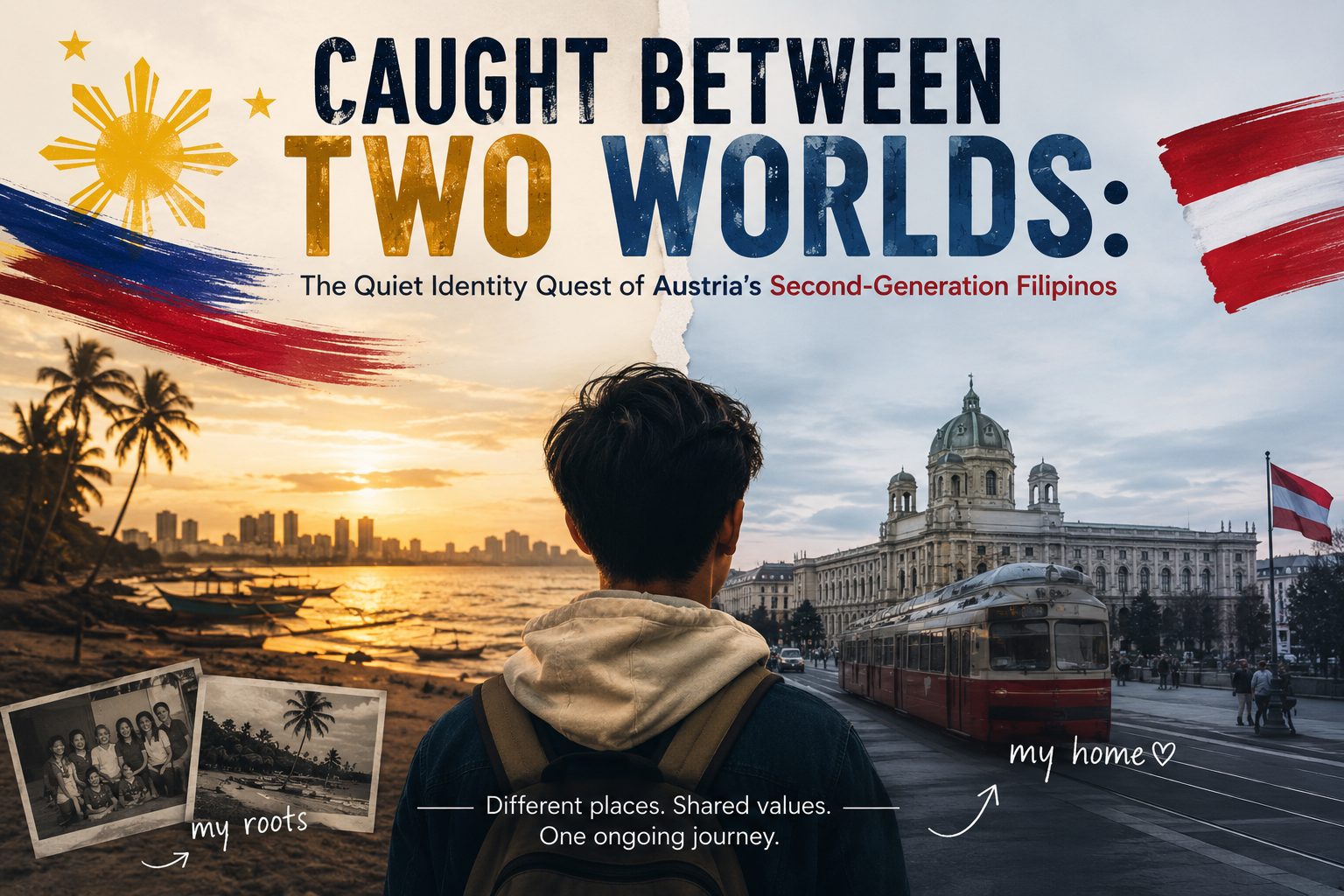
- Hector Pascua/picture: chatgpt.com


This post has already been read 2477 times!